Brakes Off in Seville: Your Essential Accessible Seville Travel Guide - Part 1
- Laura
- May 4
- 8 min read

Seville has been on our bucket list for ages and so we finally booked a five-night accessible escape to this Andalusian gem. Since we only had a few days to explore, we went into full-on "planner mode" to make sure we didn't miss a beat.
Let’s just say: Seville did not disappoint. It was a fantastic trip from start to finish!

We enjoyed a whirlwind of culture, history and more orange trees than we knew what to do with. We’ve got so much to share about navigating this vibrant city that we’ve had to split this review into two parts.
Ready to roll? Let’s dive into part one of our Accessible Seville travel guide!
Stay
For this trip, we checked into the Ibis Styles Sevilla City Santa Justa. Location-wise, it was just a 20-minute roll away from the historic heart of the Santa Cruz district.
If you’re looking for a budget-friendly option that doesn’t skimp on personality, this is it. The hotel is seriously stylish, boasting a vibrant bar and a great breakfast area to fuel up before a day of exploring.


The Room & Accessibility
While the room was on the smaller side, it felt surprisingly spacious and worked well for a shorter five-night stay. However, if you’re a heavy packer, take note: storage was a bit sparse, with limited spots to hang or tuck away clothes.

Accessibility Highlights:
The Bathroom: A total win! It featured a proper flat wheel-in shower, making transfers and maneuvering really easy.
Shower Seat: There was a sturdy fold-down seat installed inside the shower.
Space: Enough floor space to move around comfortably without feeling cramped.
Overall, it’s a solid, chic choice for those wanting to stay close to the action without the luxury price tag!
City access
One of the biggest surprises of the trip was just how flat Seville is! If you’ve ever battled steep hills in other European cities, you’ll know what a relief this is.

Outside of the historic centre, the infrastructure is fantastic. The pavements are smooth and we were thrilled to find dedicated lanes that are perfect for wheelchair users to cruise along. With plenty of well-placed dropped kerbs and a general sense of cleanliness, navigating the modern parts of the city was an absolute breeze.

Tackling the Historic Centre
Of course, when you head into the older parts of town, you’re going to encounter the "C" word: cobbles.
As you’d expect from a city with so much history, some areas are a bit bumpy. However, it’s definitely not a total "no-go" zone! We found that:
Not all the paths are cobbled; many have smoother sections and with a little scouting, you can usually find a less bumpy route to get where you need to go. The city feels very manageable if you take your time and pick your lines.
Overall, Seville is easily one of the most accessible and pleasant cities we’ve navigated to date!
Plaza de Espana
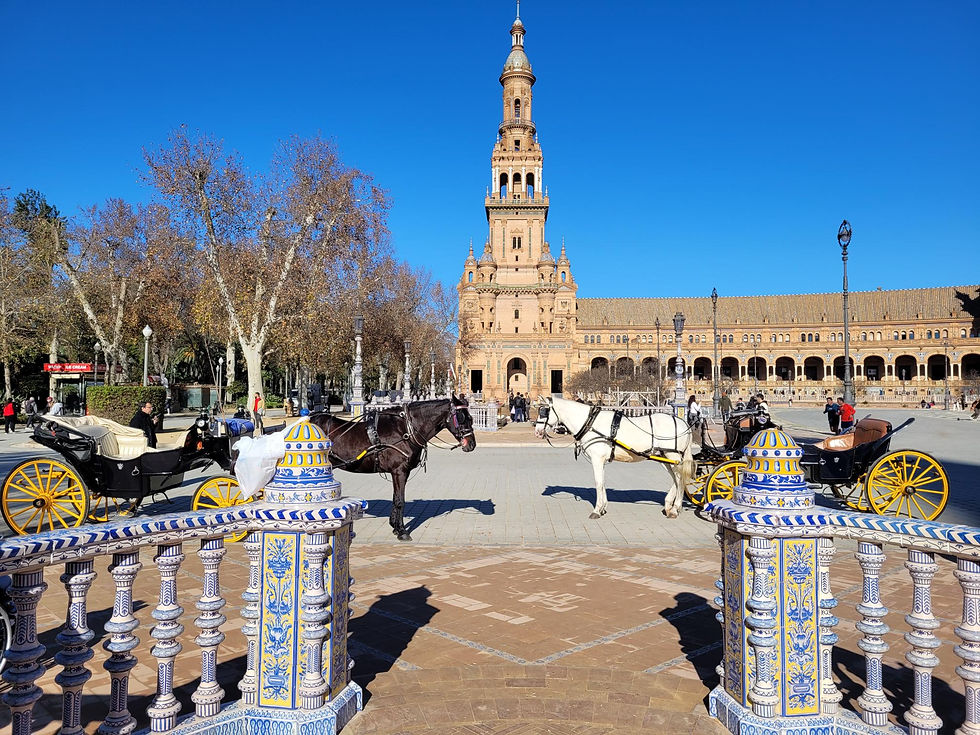
We’d seen endless photos of the Plaza de España on Instagram, so we knew it was a must-do for our itinerary. Let us tell you, it’s even more stunning in person! This place is a visual feast, packed with ornate, bright tiles and enough photo opportunities to fill an entire memory card.

As one of the city’s most iconic landmarks, the best part is that it’s completely free to explore. From our hotel, it was a smooth, straightforward 25 minute roll to reach the plaza gates.
A Walk Through Spanish History
The real showstoppers here are the tiles. Built for the 1929 Ibero-American Exposition, the plaza features a series of alcoves, each representing a different Spanish province. They aren't just pretty to look at; they tell the story of Spain’s history through intricate, colourful scenes. Whether you’re a history buff or just there for the "Gram," every turn offers something beautiful.

Accessibility Wins
Exploring the main building is surprisingly easy:
The Ramp: There is a smooth ramp located on the left side of the main building.
The Walkway: This leads you up to a wide, flat walkway where you can take in all the architectural details at your own pace without worrying about steps.
A Cultural Bonus
If you time your visit right, you might stumble upon some free flamenco performances right in the plaza. It is a fantastic way to experience the passion of traditional Andalusian music and dance!
Parque de Maria Luisa
Just across from the Plaza de España, you’ll find the Maria Luisa Park (home to the beautiful Santa Maria Gardens). It’s a sprawling public space that feels like a world away from the urban bustle, filled with towering trees, ornate water features, and of course, vibrant orange trees at every turn.

Keep your eyes (and ears) peeled for the bright green parakeets that call this park home! It’s an incredibly peaceful spot, perfect for a mid-day picnic or to relax in nature. Plus, if you’re visiting during those famous Seville heatwaves, the dense shade from the palms and Mediterranean pines offers a much-needed natural air-con.

Accessibility Breakdown
We were so impressed by how inclusive this historic park felt. Here is what you need to know for your roll through the gardens:
Smooth Surfaces: Unlike many historic gardens with deep gravel or mud, the main arteries of Maria Luisa Park are largely paved or made of hard-packed, fine-grade gravel that is very manageable for both manual and power chairs.
Flat Terrain: The park is predominantly flat, meaning you can explore the various "glorietas" (small themed squares) without facing any steep gradients.
Accessible Benches: There are plenty of benches scattered along the wide paths, many of which have paved space alongside them, perfect for stopping to enjoy the fountains without blocking the flow of traffic.
The Fountains & Features: Most of the famous tiled fountains and ponds are at ground level or have low-profile borders, so you can get right up close to admire the craftsmanship.
Facilities: You’ll find accessible public toilets located near the main entrances and by some of the larger kiosks, making it easy to spend a full afternoon here without any stress.

Whether you're looking for a quiet "roll" under the shade or a spot to admire Seville's botanical beauty, these gardens are a must-add to your accessible itinerary!
Plaza de Toros Seville
A short 20 minute roll from the gardens brings you to the Plaza de Toros, one of the most famous landmarks in the city. Built in the 18th century, this striking white and gold building is the largest bullfighting arena in Spain, with a staggering capacity for 13,000 spectators.

While we aren't supporters of bullfighting ourselves, the arena is an undeniable piece of Seville’s architectural and cultural history, so we decided to take a tour. The site includes a small museum featuring elaborate "traje de luces" (suits of lights) and various artworks. You can also head out into the bullring itself to get a true sense of the scale of the arena.

Accessibility Insights
Navigating a building that dates back to the 1700s can sometimes be a challenge, but we found the experience to be surprisingly manageable:
Entrance & Ticketing: The main entrance has level access and the staff were very helpful in directing us to the most accessible routes.
The Museum: The museum galleries are located on the ground floor. While some of the doorways are a bit narrow, they are generally wide enough for standard wheelchairs. The floors are mostly flat and smooth, making it easy to view the exhibits.
Reaching the Ring: There is a dedicated accessible path that leads you through the stables and out into the main arena. Be prepared for a bit of a bumpy ride once you hit the ring itself—the surface is made of albero (traditional yellow sand), which can be a little heavy going for manual chairs but is manageable with a bit of momentum!
The Stands: While the historic stone seating tiers (the tendidos) are only accessible via steep steps, the ground-level gallery provides a fantastic view of the architecture and the ring without needing to climb.
Accessible Toilets: There are adapted toilets available on-site, which is always a relief when you're out for a long day of sightseeing.
Even if you only view it from the outside to admire the stunning Baroque facade, it’s a significant spot to tick off your Seville list.
Torre del Oro and Guadalquivir River
From the bullring, it’s a short hop over to the Torre del Oro (the Tower of Gold). This 13th-century military watchtower is one of Seville's most photographed landmarks. While the interior of the tower isn't accessible due to its historic, narrow spiral stairs, it is well worth a visit just to admire the golden reflection it casts on the water from the outside.

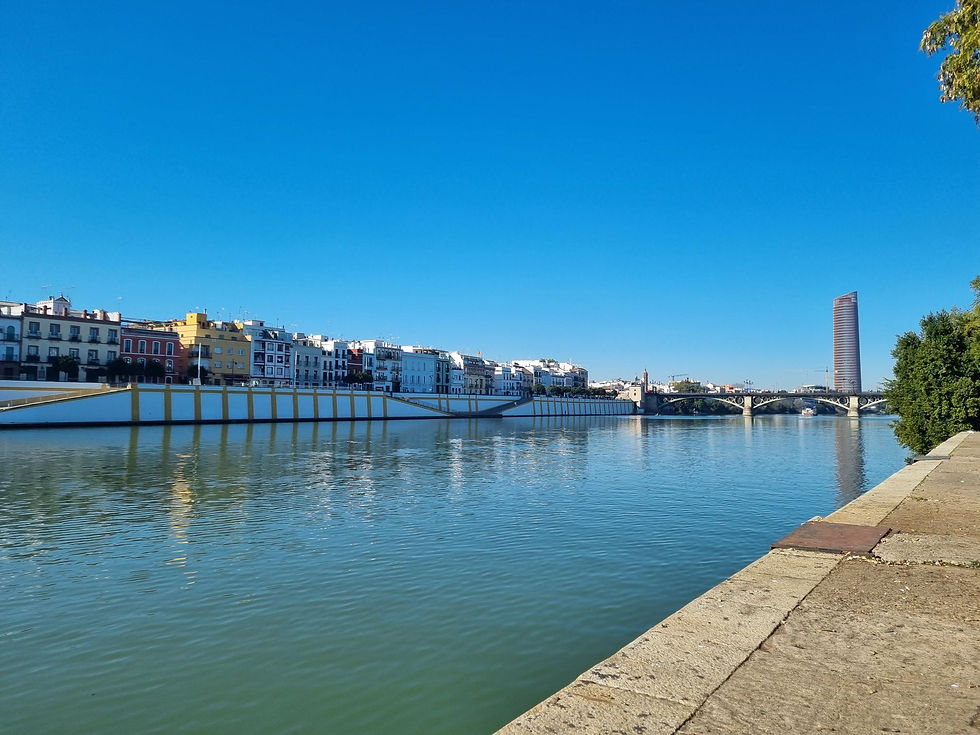
The tower marks the start of a lovely accessible walk alongside the Guadalquivir River. As one of the longest rivers in Spain, it cuts right through the heart of the city and the promenade running alongside it is a dream for wheelchair users.

Accessibility on the Waterfront
If you’re looking for a smooth, scenic route to clear your head, this is the place to be:
The Path: The riverside promenade is wide, paved, and really flat. It’s a popular spot for locals and tourists alike, but there’s plenty of room to roll without feeling crowded.
The Views: You get a front-row seat to the colourful architecture of the city and the many bridges that span the water.
Pit Stop: Need a break? There is a disabled toilet conveniently located at the Tourist Information Office right by the tower. It’s clean, spacious, and easy to access.
Seating: There are various benches and shaded spots along the riverbank if you want to stop and soak in the atmosphere.
Looking Ahead: Triana
Directly across the water, you’ll see the vibrant buildings of the Triana District. Known for its traditional pottery, soulful flamenco and lively markets, it’s an area with a personality all its own.
We’ll be crossing the bridge and giving you the full lowdown on Triana in Part Two of our Seville review—stay tuned!
Eat
If there is one thing you absolutely have to do in Seville, it’s dive headfirst into the tapas culture. The city is packed with incredible restaurants, many of which offer fantastic deals if you’re looking to sample a variety of dishes without breaking the bank.

Near our hotel, we stumbled upon La Catedral de la Tapa (Buhaira). It’s a charming, smaller spot with a mouth-watering selection. Our absolute standout favorite? The Espinacas con Garbanzos—a classic Andalusian dish of spinach and chickpeas. It sounds simple, but the spices make it incredible. Trust us, it’s a must-order!
Accessibility Note: Dining Out
Street Level: Most tapas bars in the newer areas, like where we stayed, have level entry or very small lips at the door.
Outdoor Seating: Seville is the king of "al fresco" dining. If a restaurant interior feels a bit tight for a chair, they almost always have plenty of tables outside on the flat pavement, which is perfect for people-watching while you eat!
Visit our Instagram page to see more photos and videos from our trip!
Coming Up in Part Two...
That’s it for the first half of our accessible Seville adventure! We hope this has given you a head start on planning your own Spanish getaway.
But we aren’t done yet. In Part Two, we’ll be taking you inside the breathtaking Royal Alcázar (yes, the Game of Thrones film set!), exploring the quirky "Seville Mushrooms" (Setas de Sevilla), and venturing across the river into the soul of Triana.
Stay tuned—you won’t want to miss it!

Comments